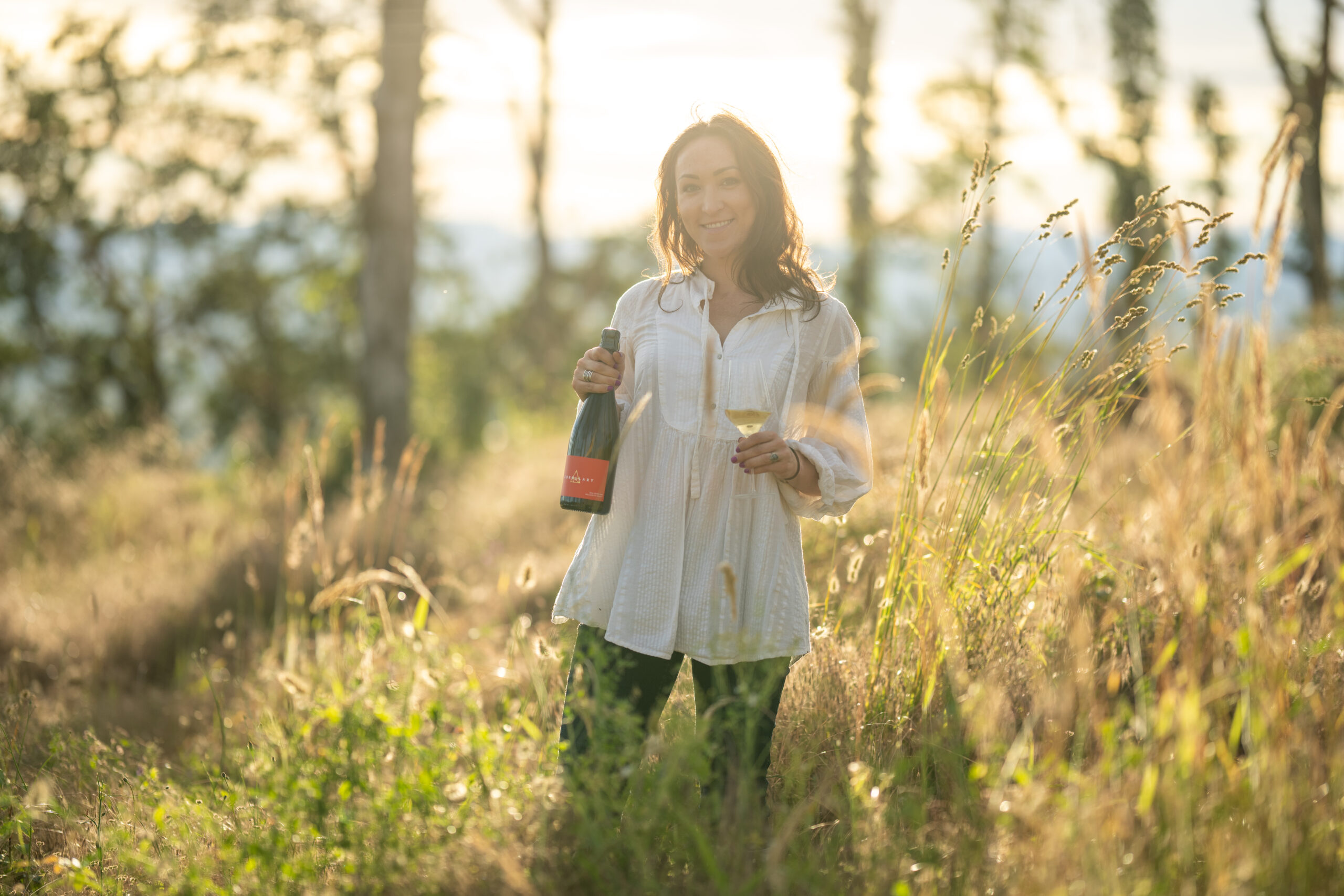
We sat down with winemaker Jeanne Feldkamp of Corollary Wines to discuss Method Oregon, the nonprofit organization setting a new standard for Oregon’s sparkling wines. Jeanne co-founded Method Oregon and is passionate about elevating Oregon’s national and international reputation as a premier sparkling wine region—with sustainability at its core.
What is Method Oregon?
The conversation about forming something like Method Oregon has been happening in the sparkling community for many years. My partner Dan and I have been producing sparkling at Corollary since 2017, and we were having this conversation with various people back then. I’m sure it preceded us, too. Collaboration has always been a part of making wine in Oregon, so we are just formalizing things more for sparkling specifically.
Today, we are a nonprofit organization comprised of 50+ sparkling winemakers dedicated to establishing Oregon as a world-class sparkling region and setting a standard for quality and sustainability.
We tested the idea for Method Oregon in 2025 with a Grand Tasting to gauge whether there was a critical mass in the sparkling community to do something bigger. After a successful event, complete with tasting and educational components, we knew the time was right to move forward and establish Method Oregon.
What about the Method Oregon standard?
There are four components to it. First, wines must be 100% made in Oregon; the fruit must be grown and production done entirely in Oregon. Wines must also be made in the traditional method and aged en tirage for a minimum of 24 months, which is a higher entry level mark than most sparkling standards around the world. Sparkling wines that carry the Method Oregon mark must have their AVA of origin and their disgorgement date on the bottle for consumer transparency. And starting in 2029, the fruit that goes into Method Oregon wines must either be farmed using organic inputs only or farmed in LIVE Certified vineyards that are farmed without synthetic herbicides.
Why the delay until 2029 for farming standards?
You can’t change vineyard practices overnight, so we knew we needed to build in a transition period to ensure winemakers and growers were able to rise to the Method Oregon sustainability standards. The standard must be meaningful to ensure Oregon is known as a place that’s responsible and sustainable with farming, especially for sparkling wine.
Will Method Oregon hold another Grand Tasting this year?
Yes, and we are expanding it into a three-day event this year. There’s a diversity of producers and lines this year, and a lot of ways to explore. There will be an education portion and a tasting portion. There will be a Bubbles Block Party at Argyle, which is going to be a ton of fun with some very special bottles. We have a la carte tickets for most of the events. There’s also an all-access pass inclusive of the Friday and Saturday events. Everything on Sunday is ticketed individually because they’re all at different wineries. You can follow your own curiosity.
The Grand Tasting event last year included 22 wineries and now we have 50+. We have a pretty big diversity of wineries across the state—some that are really big, some that are really small and some that are releasing their first sparkling this year. But the bottom line is that we all really care about this place that we live in. We really care about making high-quality sparkling wine, and we all really care about the land.
What is the biggest advantage of coming together as an industry to collectively tell the story and set standards?
We’re taking a page from the pioneering Pinot Noir producers in Oregon. Early on, they got together and talked about the Willamette Valley as the source for world-class pinot noir. Instead of talking about 50 individual wineries, they talked about the Willamette Valley as a whole being the place to come for great pinot noir. And they were very successful in doing that. If you ask people across the country, where great pinot noir comes from, they will say the Willamette Valley. We want to do that same thing—establish a regional identity for Oregon sparkling. If we’re all speaking the same language, consumers will notice.
The notion that we’re all working together has anecdotally been very attractive to consumers. We hear from people in the tasting room that they’re kind of fascinated with how we’re all working together to do this. It’s important in the trade context as well. We’re focused on consumers with our summer event right now, but we’re also developing plans for trade events in the future. And getting the story out to sommeliers and influential buyers across the country is important because restaurants are the place where a lot of consumers first taste wines and start exploring.
How does wine intersect with tourism?
No one plans a trip in a vacuum. People don’t only come to Oregon to visit wineries. They also want to find great places to eat and go hiking. We’re very privileged that Oregon has all of that; that can all really kind of work together to make recommendations. It’s very common when somebody comes in for a tasting to ask us what else to do while they’re in Oregon. We make some recommendations and they go ahead and book some of those things. The referral effect is strong.
How important is earned media and word-of-mouth for your communications strategy?
It’s 100% important. It’s absolutely critical. There’s a lot of noise out there in the world, and we can do as much social media as we want, but you definitely need some outside validation to tell people that this is for real. The tourism industry has been very supportive in this area, bringing journalists in for events and helping secure media.
What does success in five or 10 years look like?
I want Oregon to be known for sparkling the way the Willamette Valley is known for pinot noir. When people think of sparkling wine, they immediately think of Oregon. Having Oregon on par with the Champagne region in France is really the long-term play. Direct to consumer sales are incredibly important for wineries of all sizes, honestly, especially during a time of transition for the industry. Getting people here and making those direct connections with visitors is super critical.
You mentioned the industry is in transition. What do you mean by that?
We all see the headlines about how wine sales are contracting as people are drinking a little less. And what we’re seeing is like, yes, across the board, people are drinking a little less, but there are very different market patterns. Sales from people who seek out higher end wines have been much more stable. And within the different segments of the wine market, sparkling remains a bright spot. By setting the bar high for sustainability and telling the collective story of Oregon sparkling, we can build on that.
Interested in learning more about the sparkling wine producers of Method Oregon? Explore the new Method Oregon Trail Map